


Our Initiatives
Advocacy & Civic Engagement
.png)
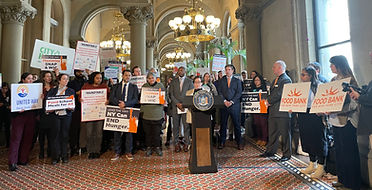
We believe food justice is political. That’s why we create meaningful ways for our community to speak up and be heard.
SOFSA hosts listening sessions with elected officials, organizes community–candidate forums, and joins advocacy days in Albany and Washington, D.C. Each year, we release a voter guide that highlights where candidates stand on food system issues. Our policy platform drives this work and shapes our coalition efforts.
Looking ahead, we’re building toward deeper civic engagement through training and capacity-building, so more people can organize, advocate, and lead.

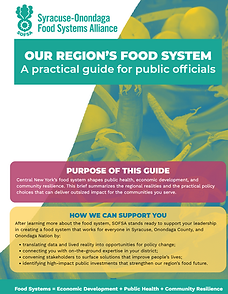
A practical guide for public officials
Take Action Now
There are many ways to make your voice heard and support food systems advocacy!
Click on one of the Calls to Action below so we can create a more just food system for everyone.
Demand a better Farm Bill
Help Protect essential funding for SNAP
Reinstate USDA's Food Security Report
The U.S. Department of Agriculture (USDA) has announced that, after this year, it will no longer release the Economic Research Service (ERS) Household Food Security report, the gold standard for measuring hunger in America. This decision silences the evidence we need to hold policymakers accountable and threatens to deepen America's hunger crisis.
Let's make sure they reinstate the Report.
SOFSA is part of the following coalitions working on different food system issues:



2026 Advocacy Platform
Grounded in community input and the collective expertise of the SOFSA network, this platform highlights the priority areas where our coalition will focus its advocacy in the coming year. Together, these priorities guide how we cultivate the civic power needed to protect and expand public support for equitable food and farm programs. Rooted in our shared values and long-term vision, this platform charts a path toward a thriving food democracy.
Co-leading Local Efforts
Working hand-in-hand with partners and community members locally, the SOFSA network will help to lead efforts to advance policy change in the following areas:


Root Causes of Hunger
Build public awareness of the interconnectedness of food with broader issues with the aim to promote dignity, food security, and food justice.
Food Retail & Fresh Food Access
Invest in food system infrastructure that increases access to fresh produce and drives regional economic development.
Farm to Institution
Expand local procurement and supply chains in schools, universities, hospitals, and other institutions to strengthen the regional food economy.
Supporting Broader Advocacy
As partners alongside coalitions leading broad advocacy efforts, we aim to lend learnings from our region to the many voices working together for change at the state and national level. In this way, SOFSA will play a supporting role in advancing the following policies:


Nutrition Education & Food Literacy
Advocate for structures that support a diverse network to provide accessible and culturally responsive food and nutrition education.
Environmental Justice
Support a food system that protects the right of all people to a healthy environment and equal protection from environmental hazards.
Farmland Access & Preservation
Support the next generation of farmers – both urban and rural – to build a robust and resilient food system.
How We Set Advocacy Priorities
Our Advocacy Priorities are set through a participatory process that keeps accountability with the community.
Members interested in helping set priorities can participate in the public Food Justice Policy & Action Committee meetings held throughout the year. If you want to participate in our policy priority setting process, reach out to maura@syrfoodalliance.org or look for our next meeting on the public calendar.
The process of setting our policy priorities is divided into six phases:
Initial Brainstorming ➝ Research ➝ Narrowing down ➝ Equity Check ➝ Final Review ➝Coalition Ratification


